BLOG: QILO x Kommando Store - "South Africa" Collection (Drops 2/6)
QILO x Kommando Store
Cloning a camo from widely available samples is one thing. But what happens when something is too obscure to exist in physical form?
When it came to making something decidedly “Kommandostore” with a touch of streetwear, we started looking at South Africa’s military history for inspiration.
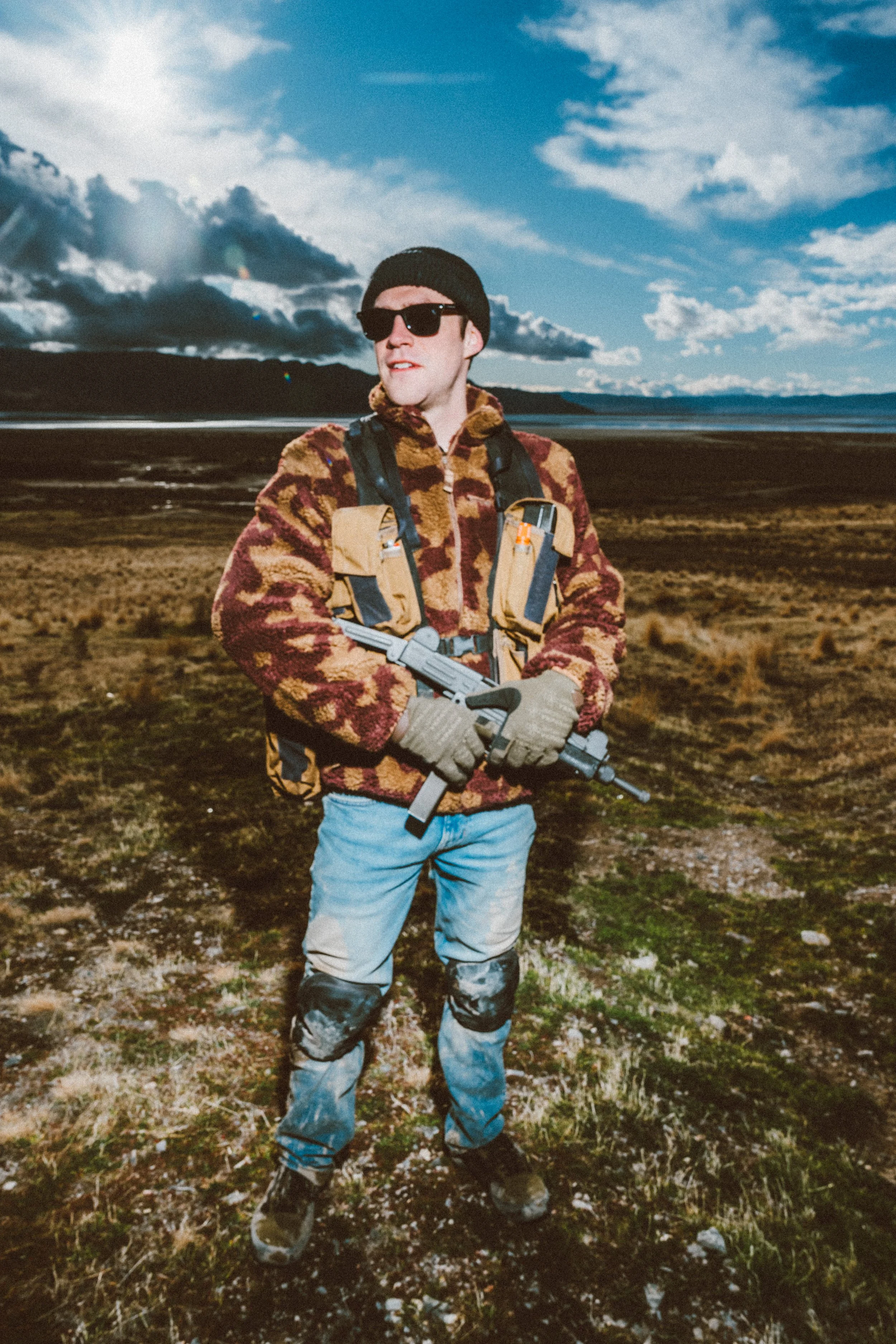
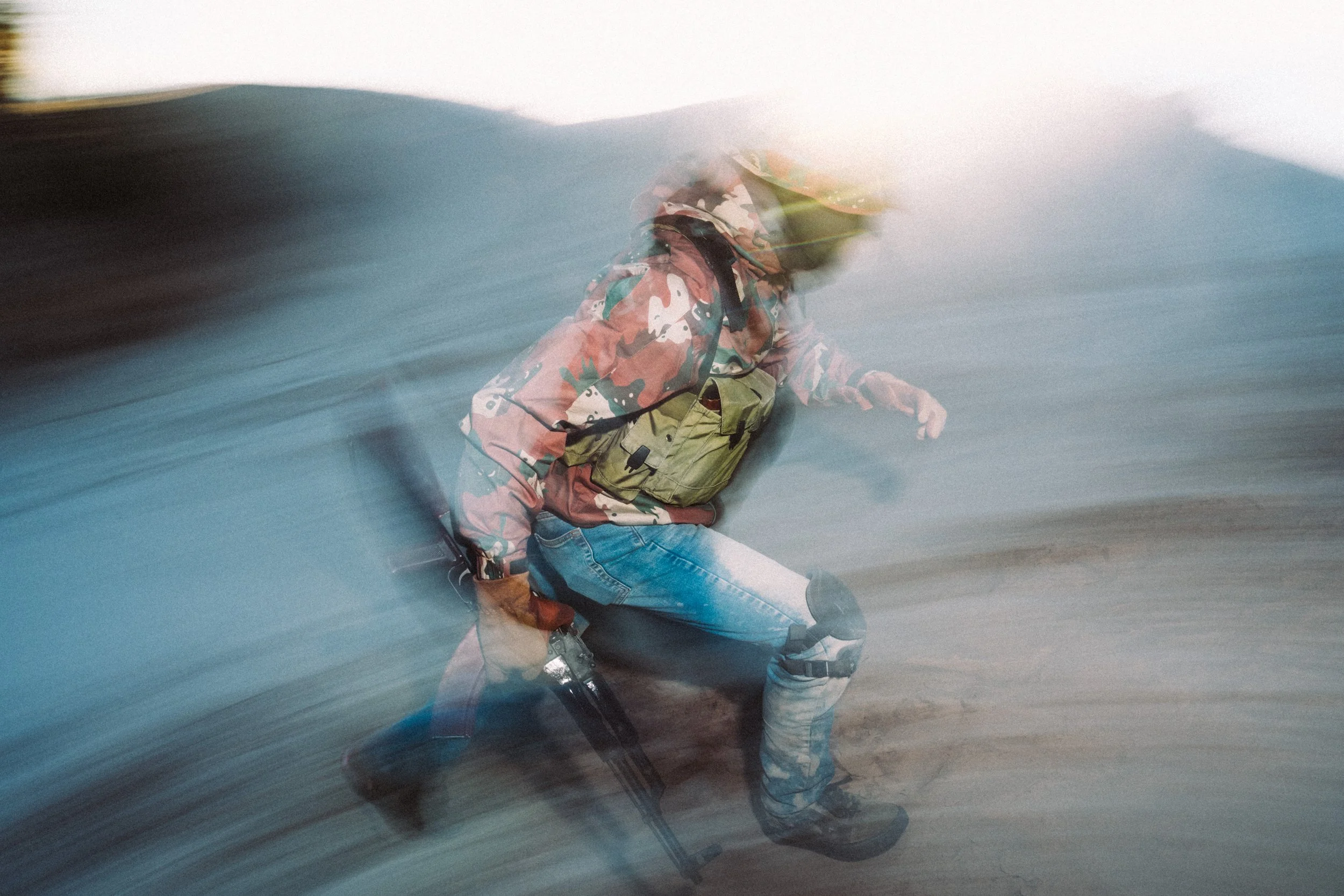
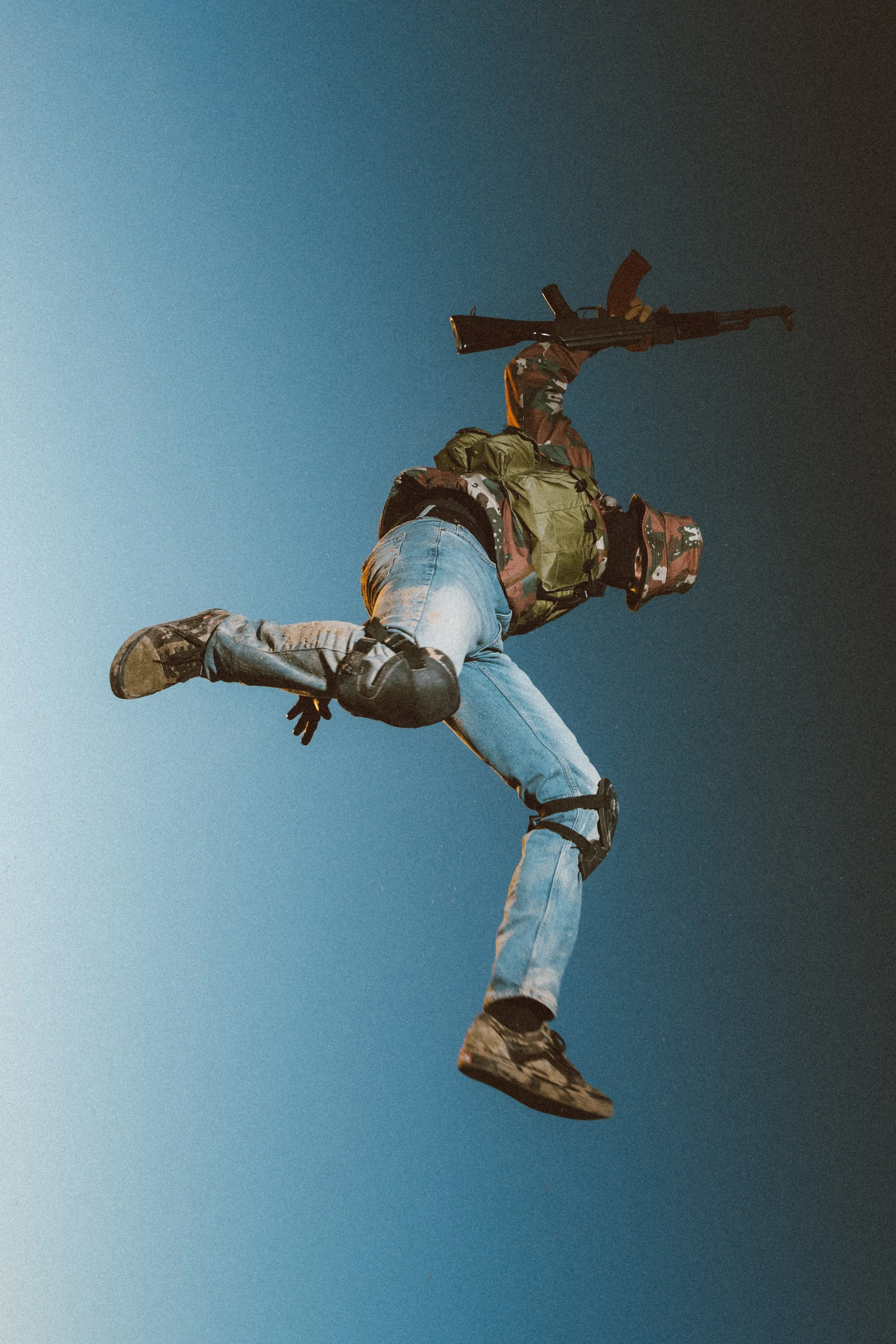
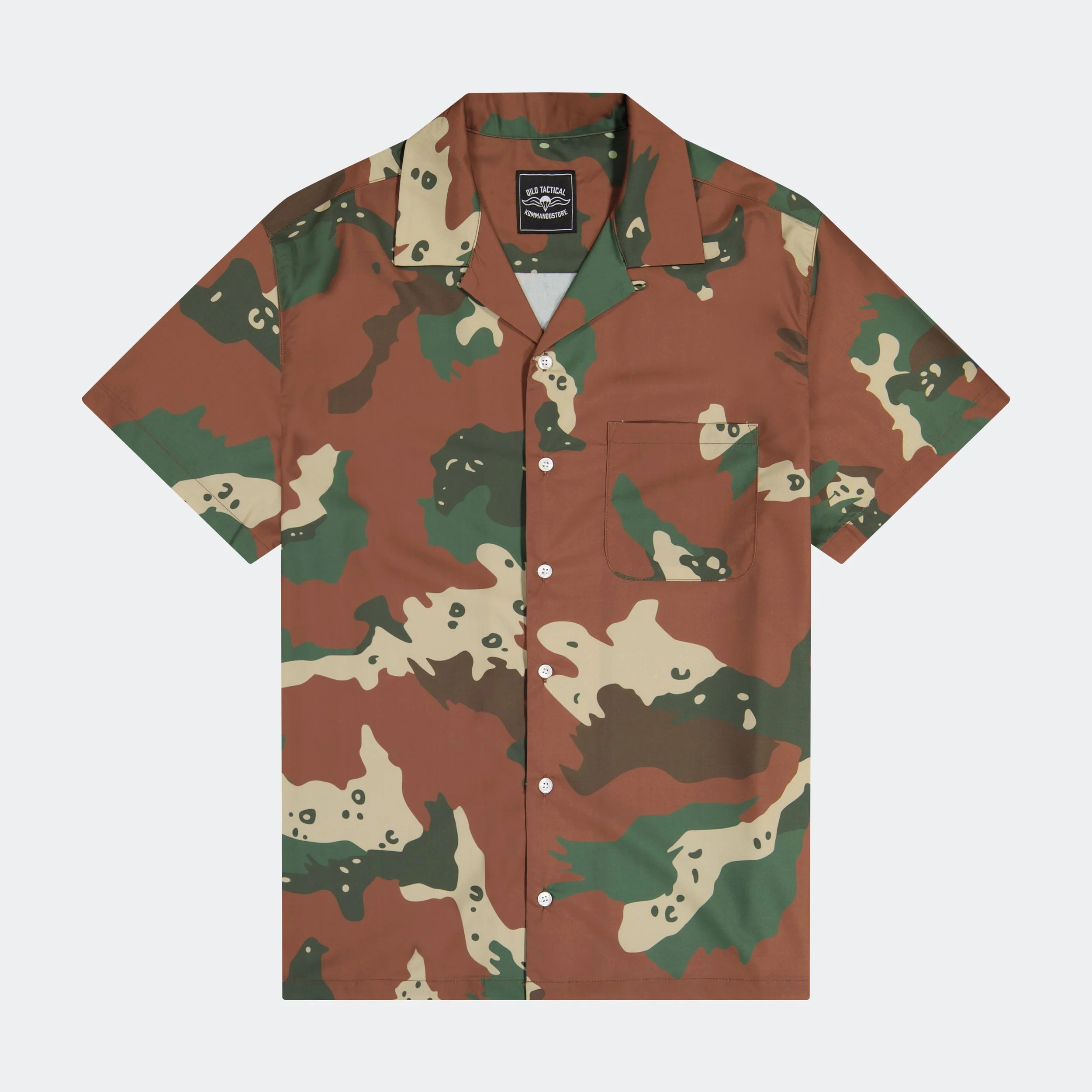
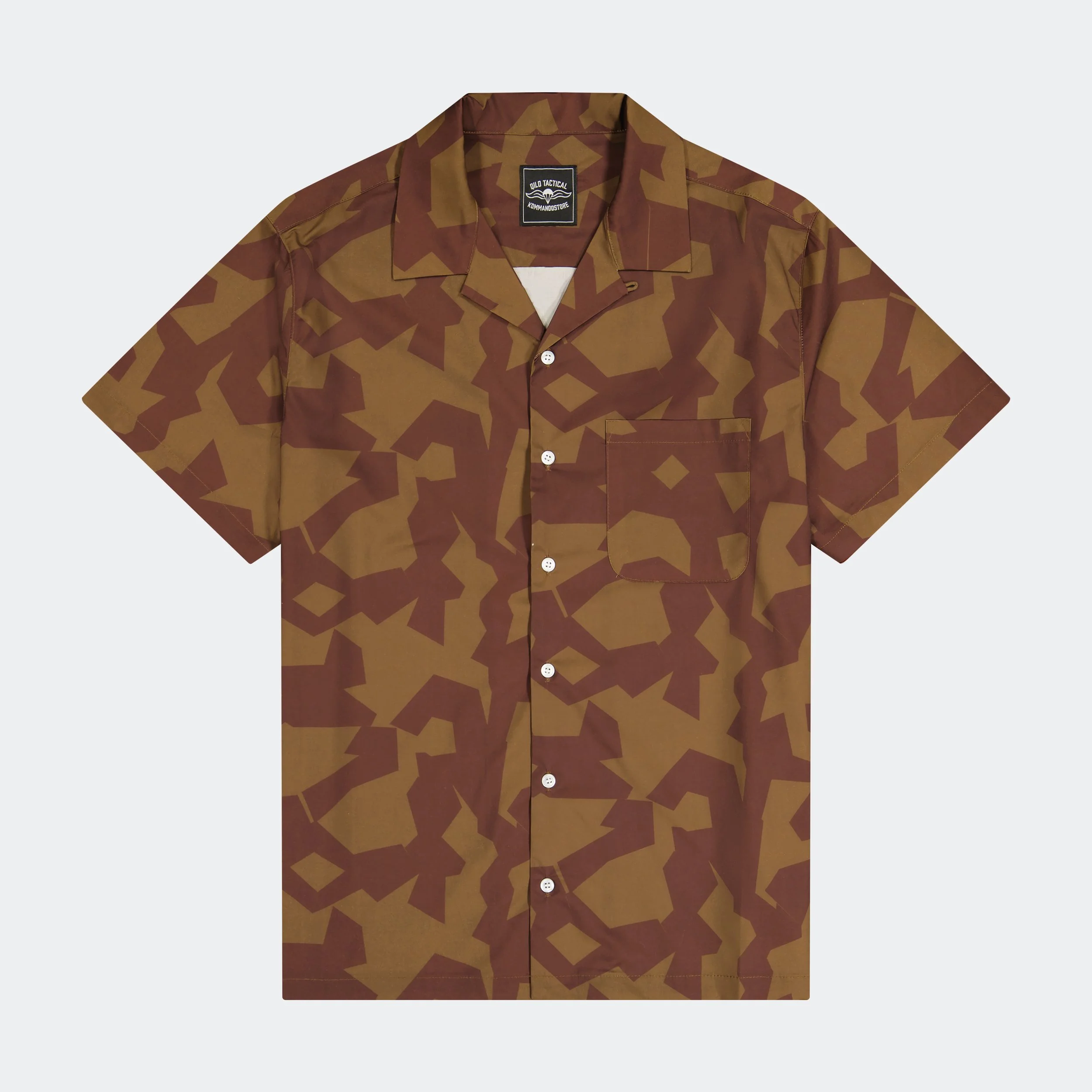
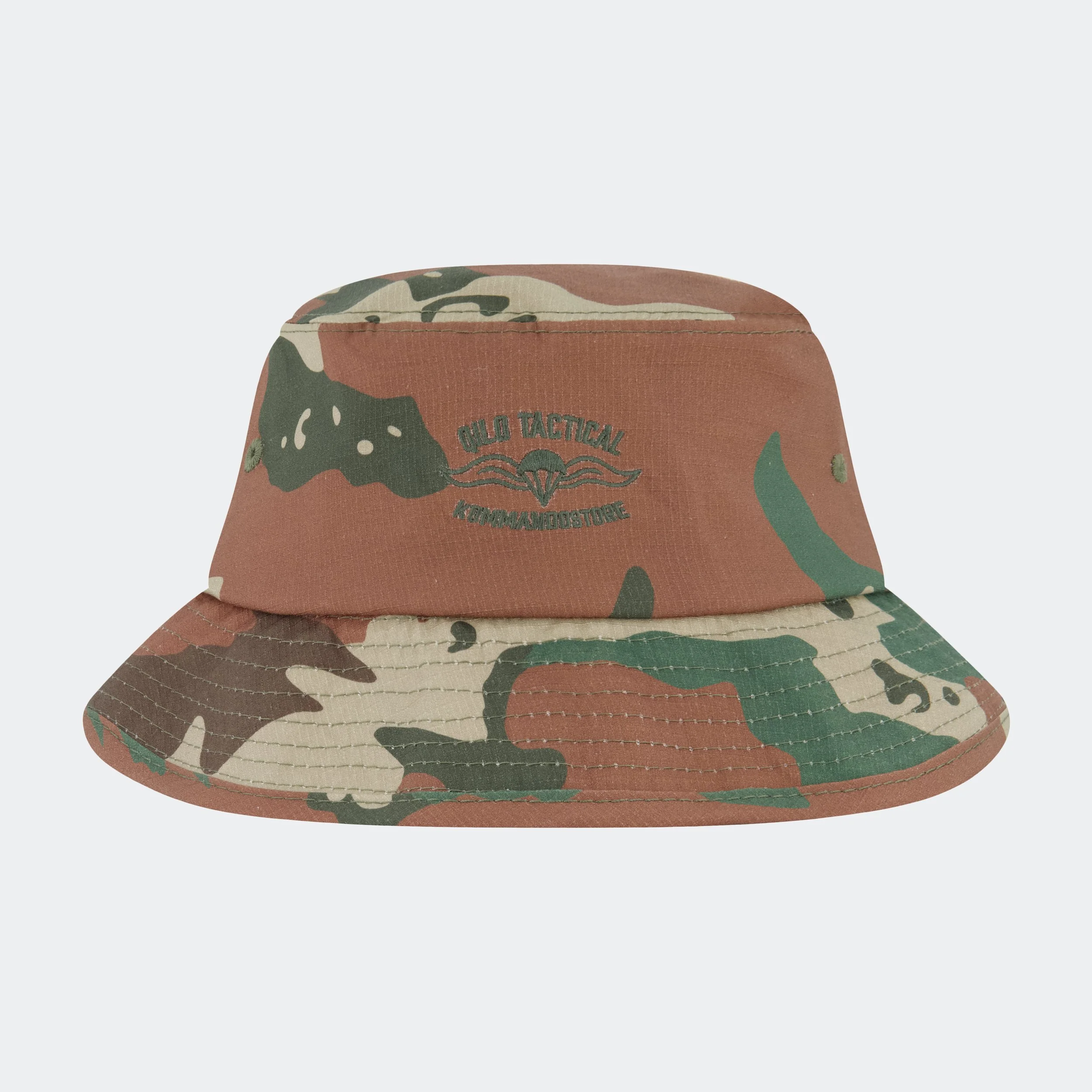
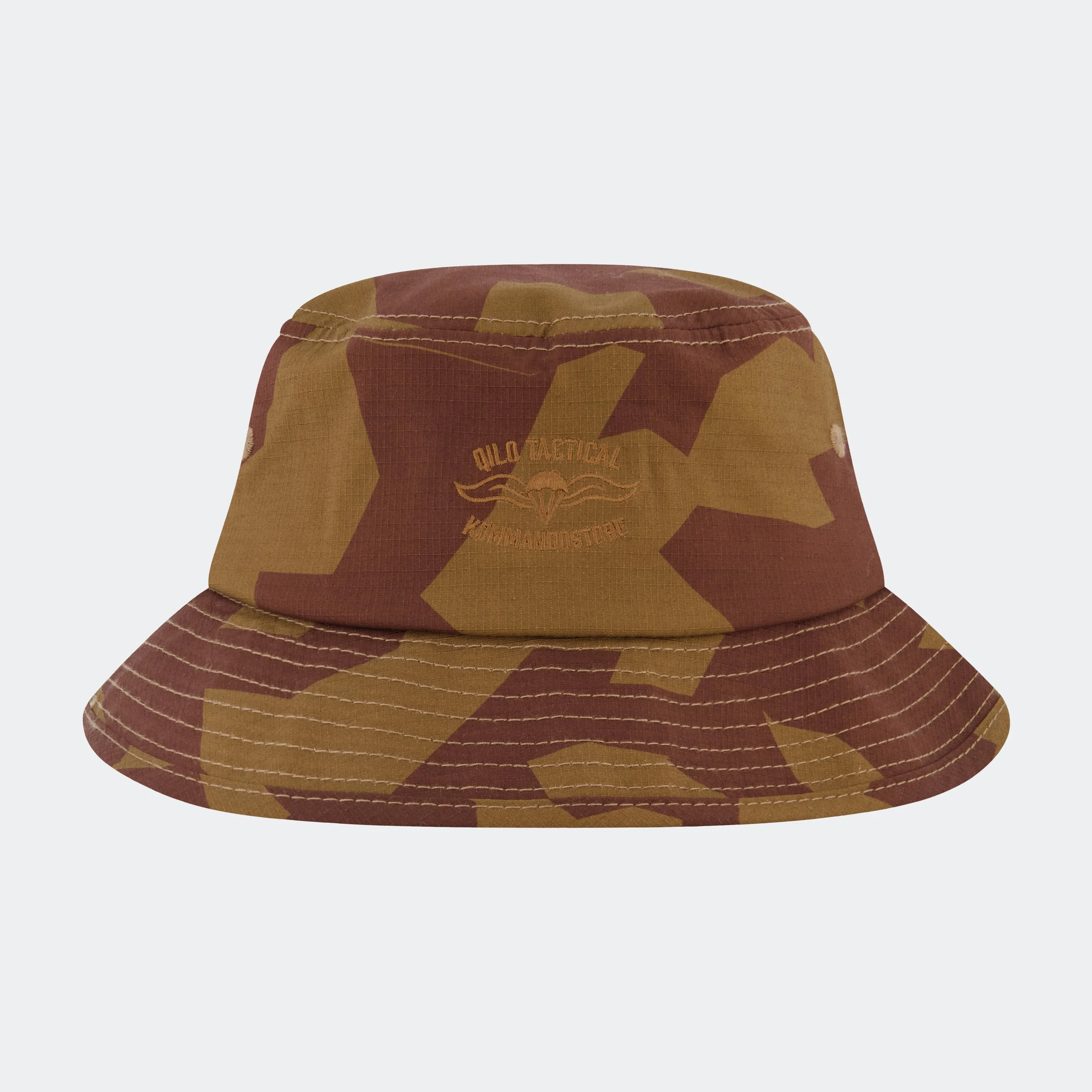
The capsule collection focuses on two South African Camos; one widely issued and one that is experimental:
Soldier 2000 - Issued to the South African National Defence Force since 1994.
It is a serious offense for anyone to wear the camo without authorization from the government. The Defence Act of 2002 explicitly prohibits the use of the camo.“DT Splinter” - An experimental camo believed to be developed by M.J. Du Toit - the man behind a large portion of the SADF’s early webbing development, including pattern 70.
There is only one known photo of this experimental recon pattern - with M.J. Du Toit wearing it. Hence “Du Toit” or “DT” Splinter as our naming convention.
Drops Friday, 2/6 at 3PM EST
Qilonyc.com

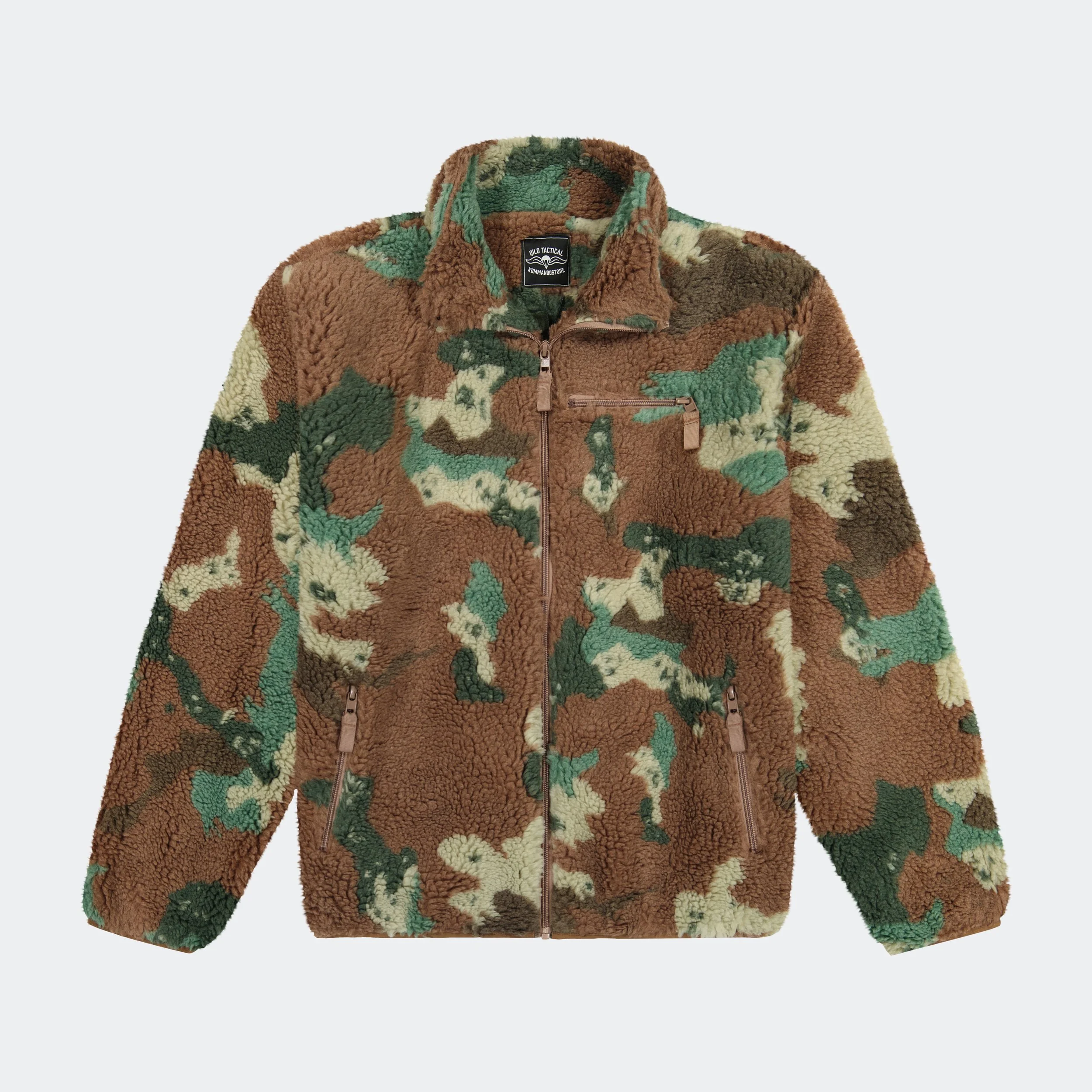
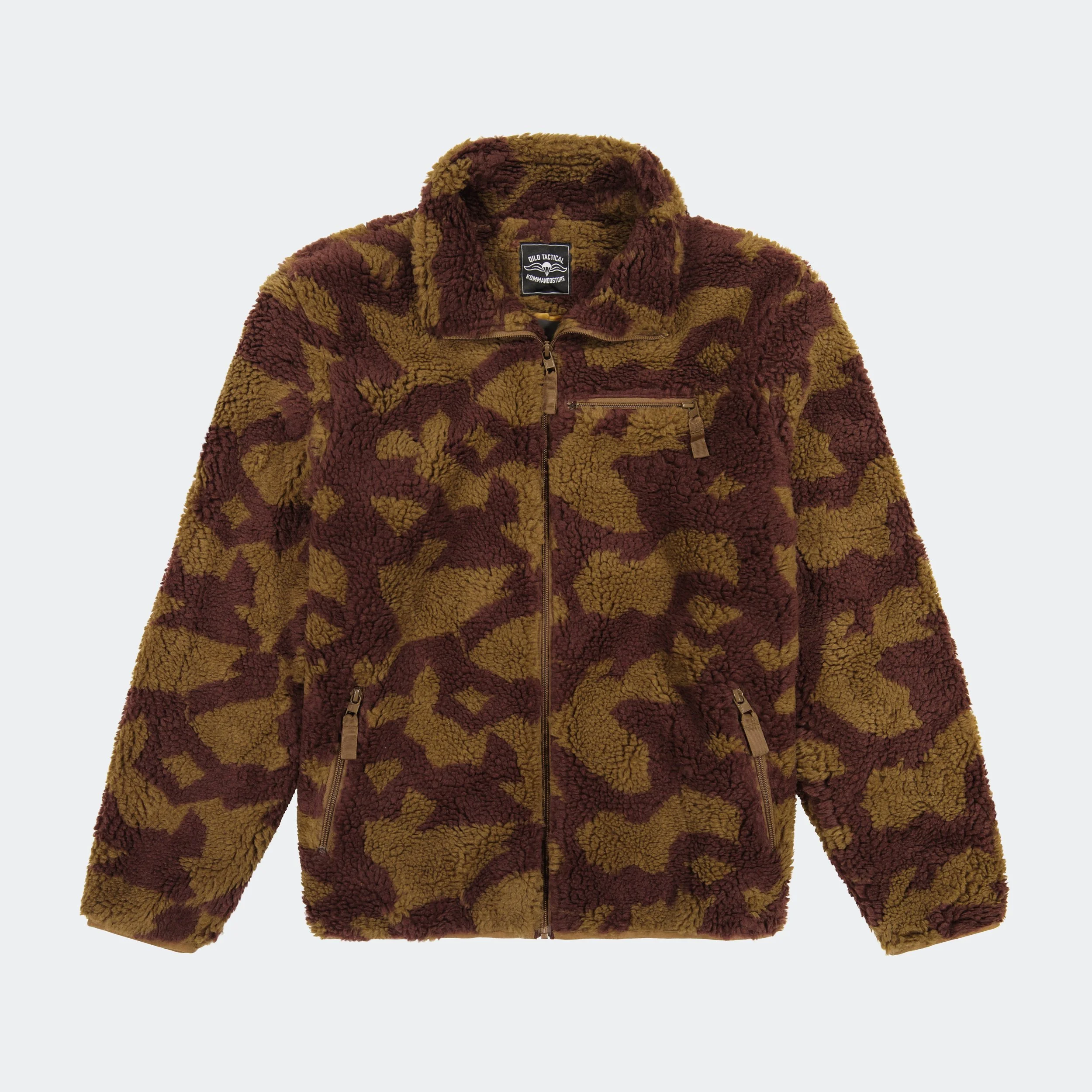
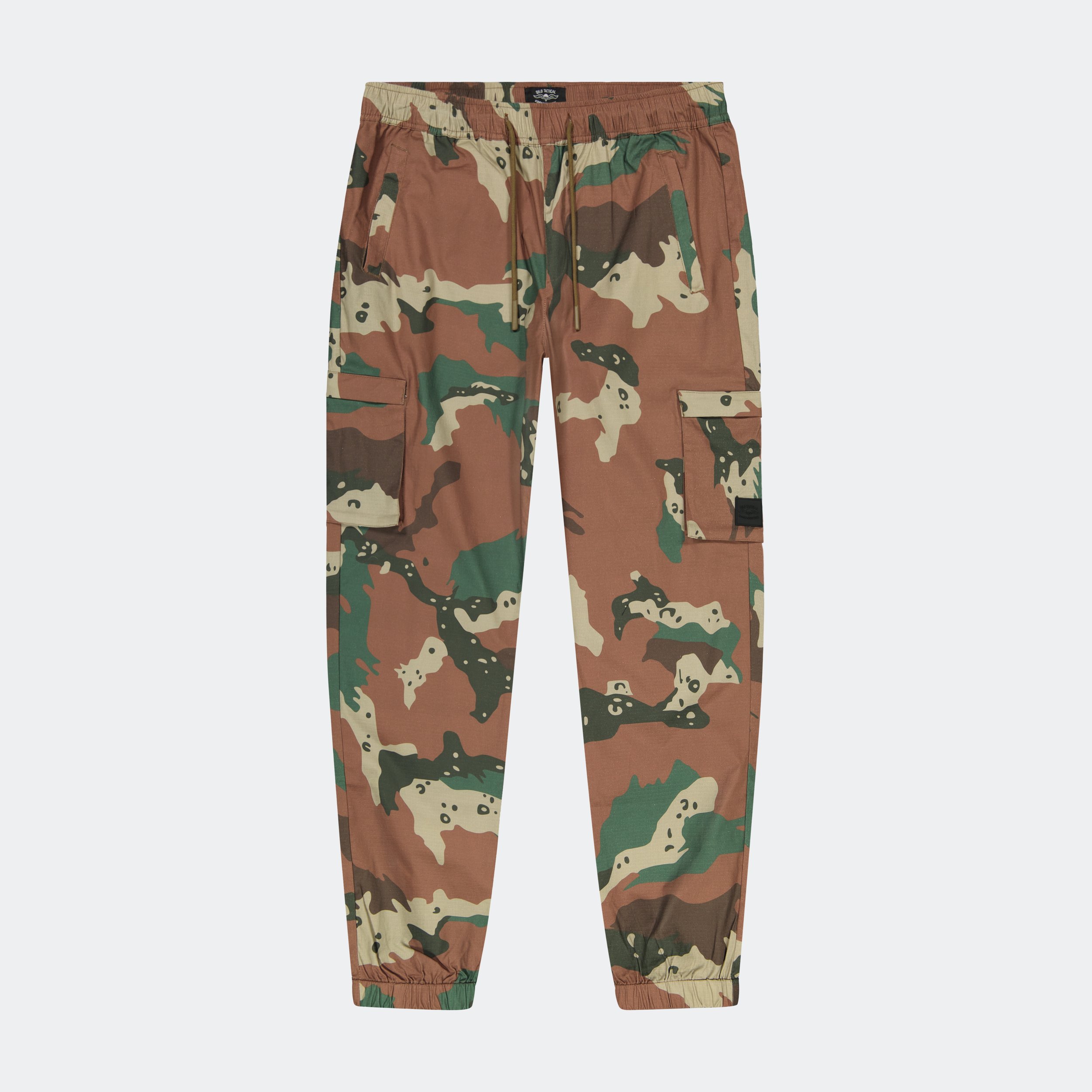
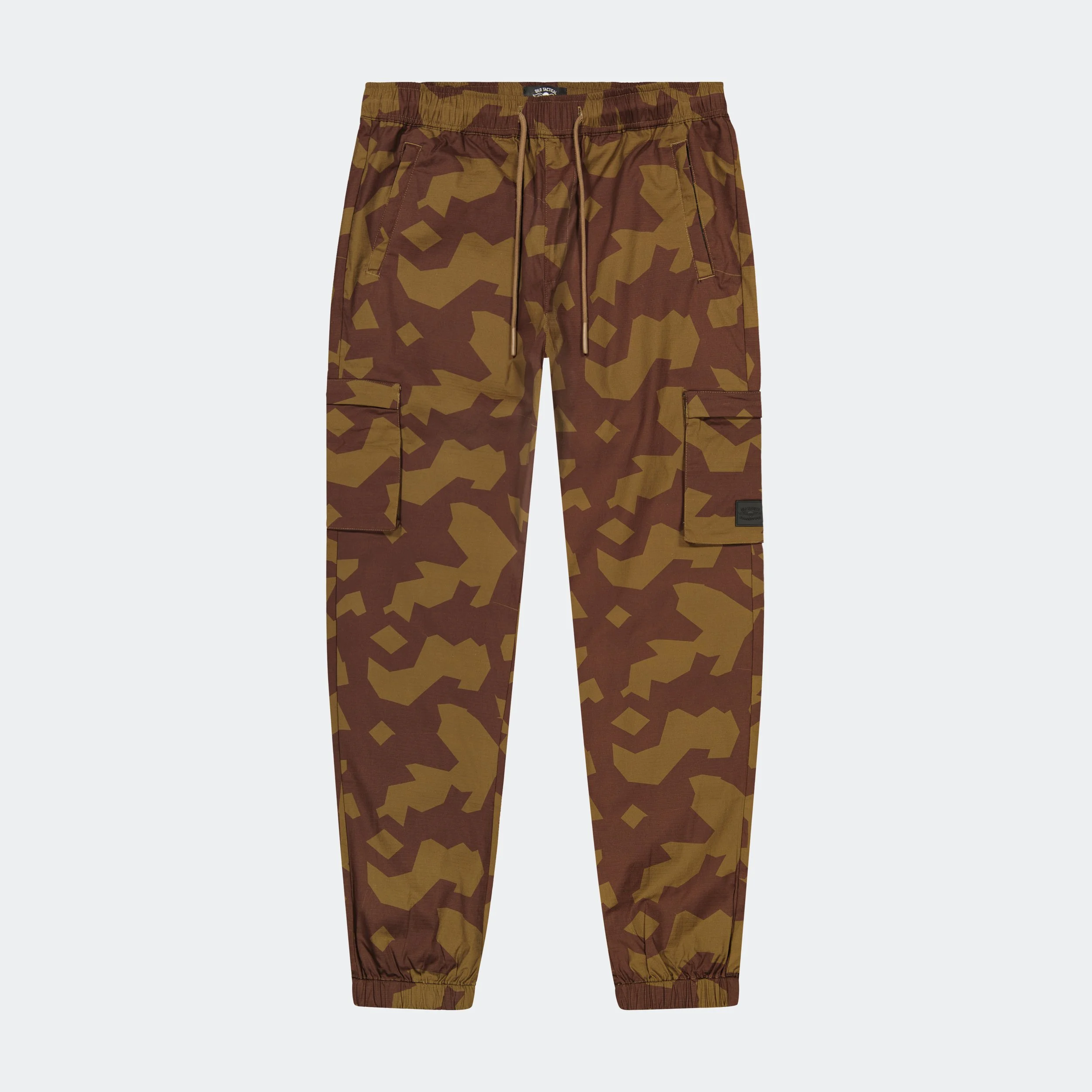
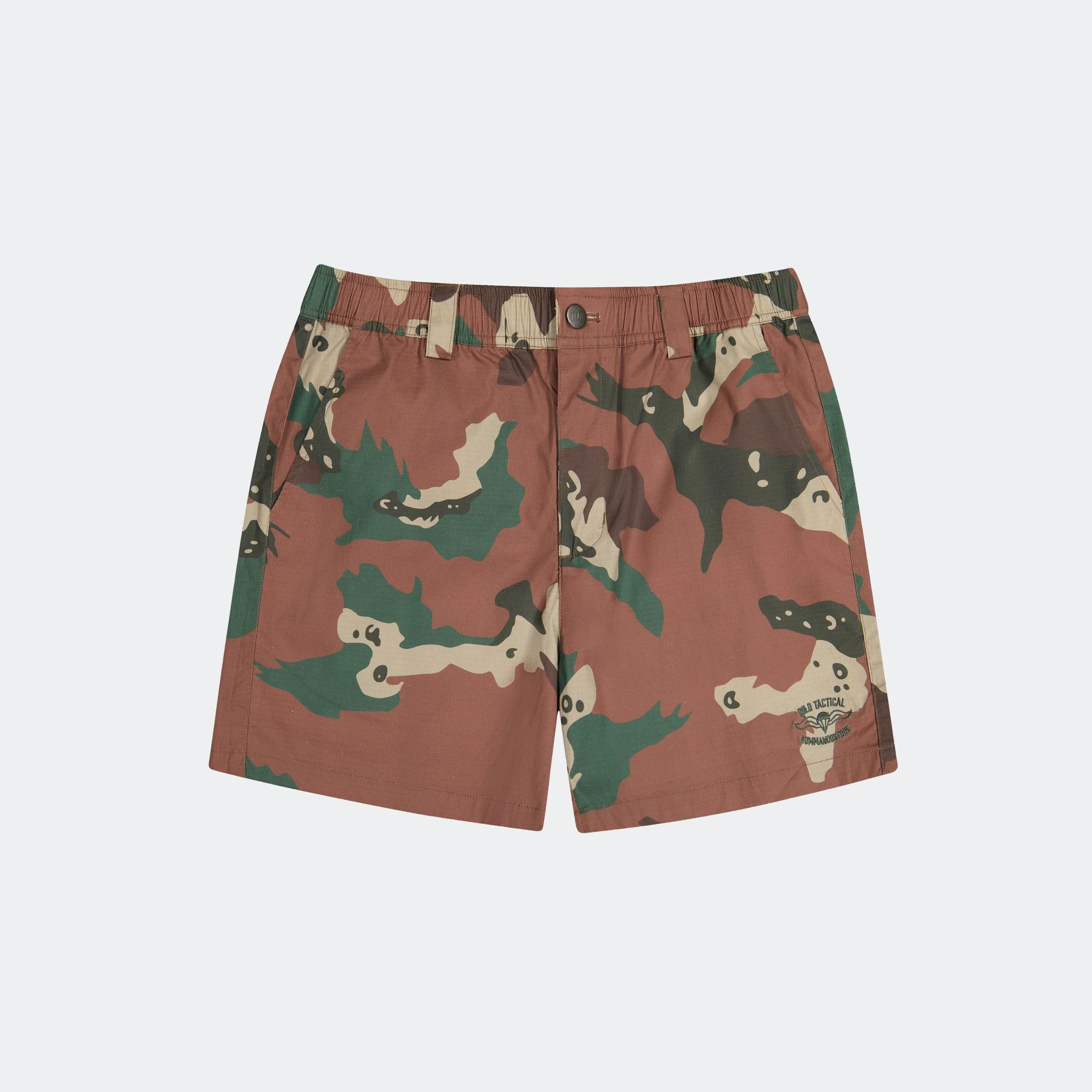
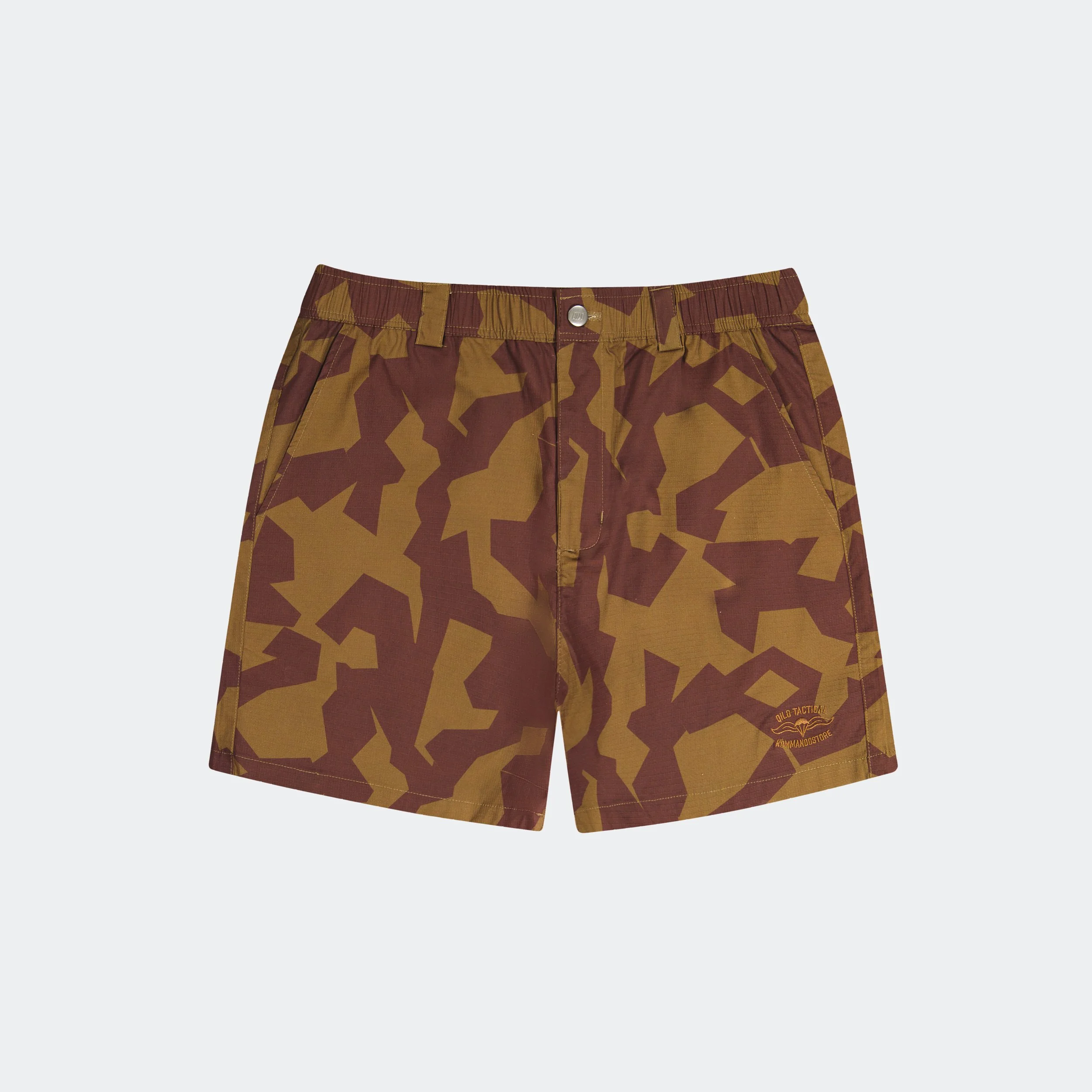
Gen. II Sherp - 160 USD
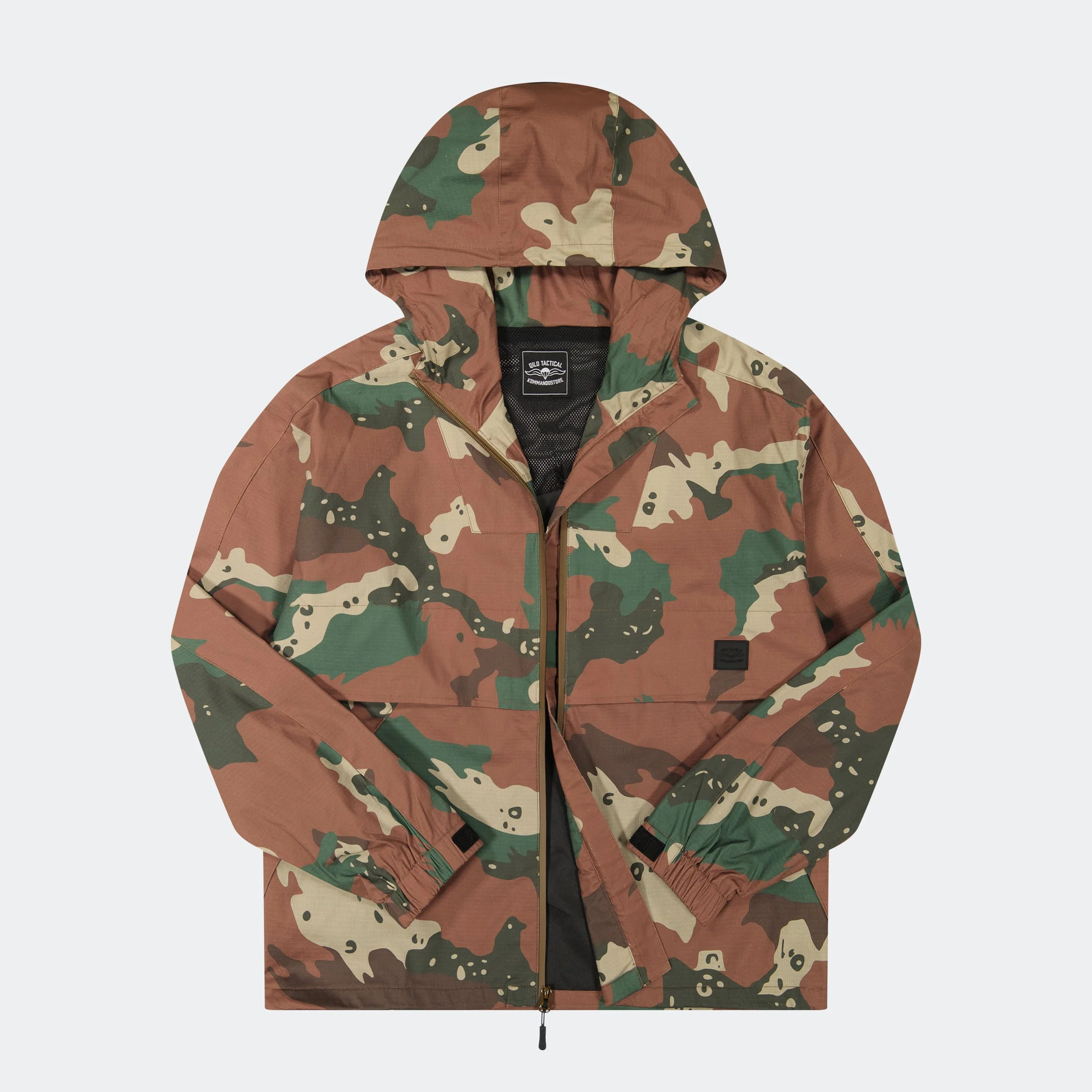
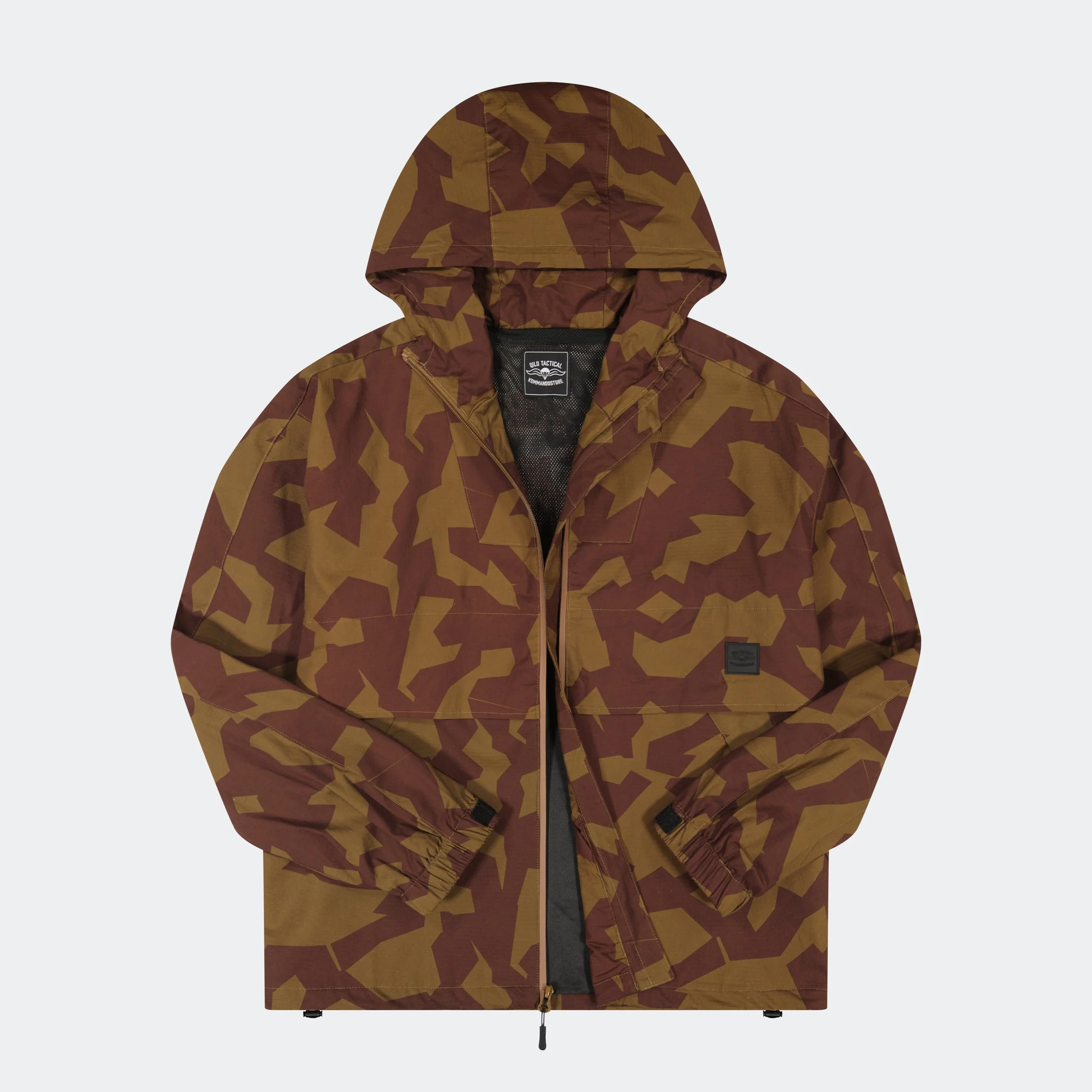
Retro Windbreaker - 145 USD
Jogger - 82 USD
Resort Shirt - 58 USD
EDC Mk. II Shorts - 58 USD
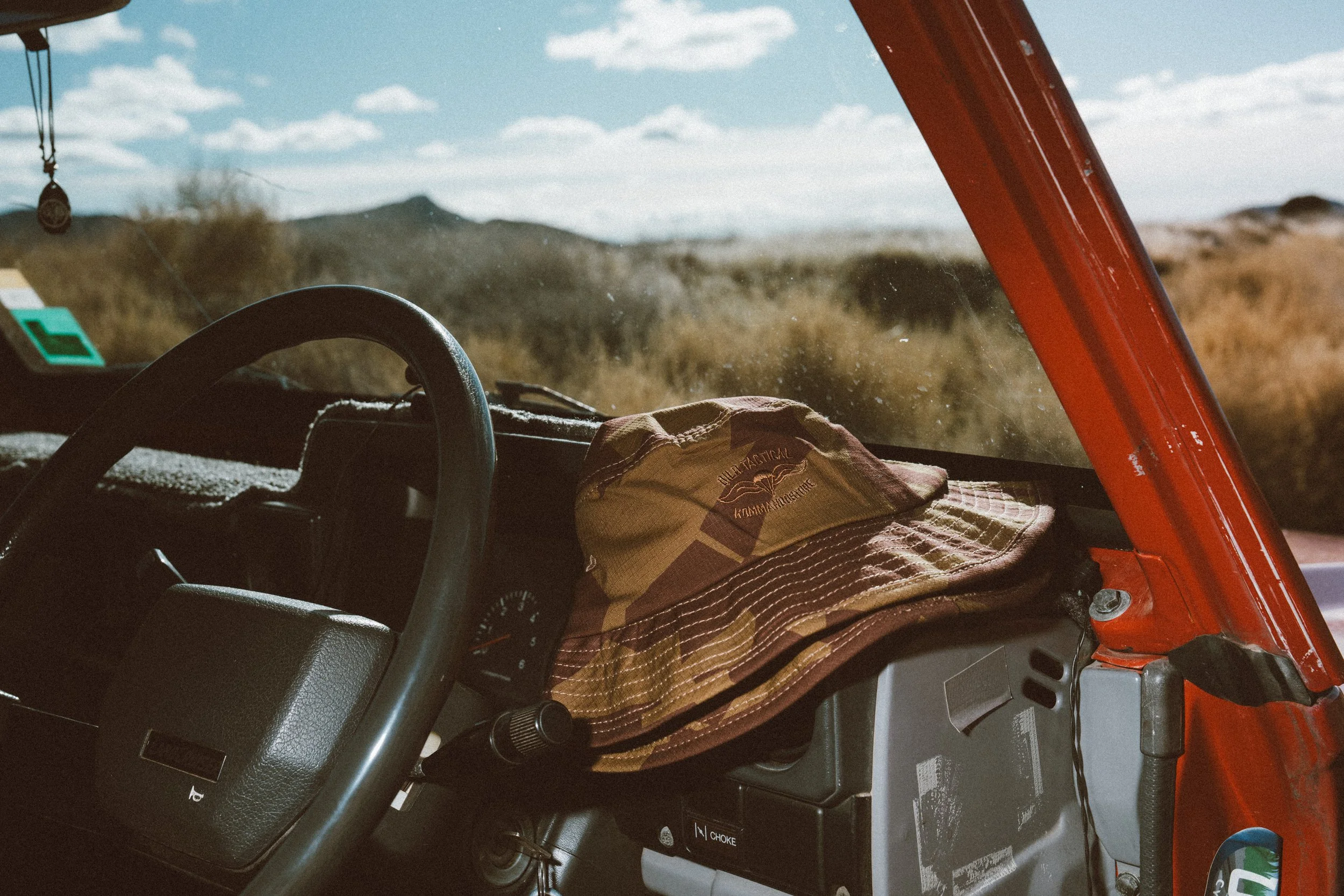
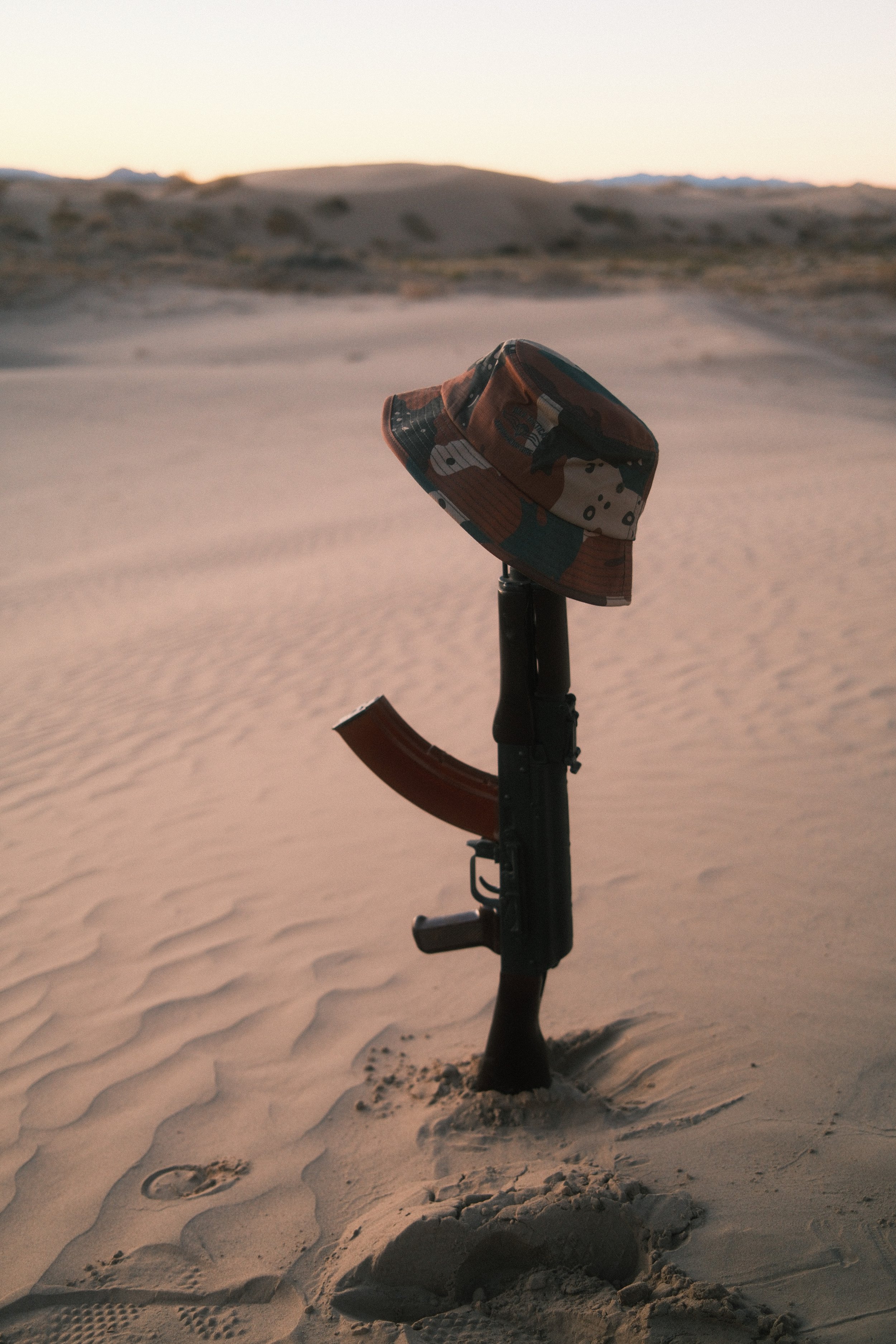
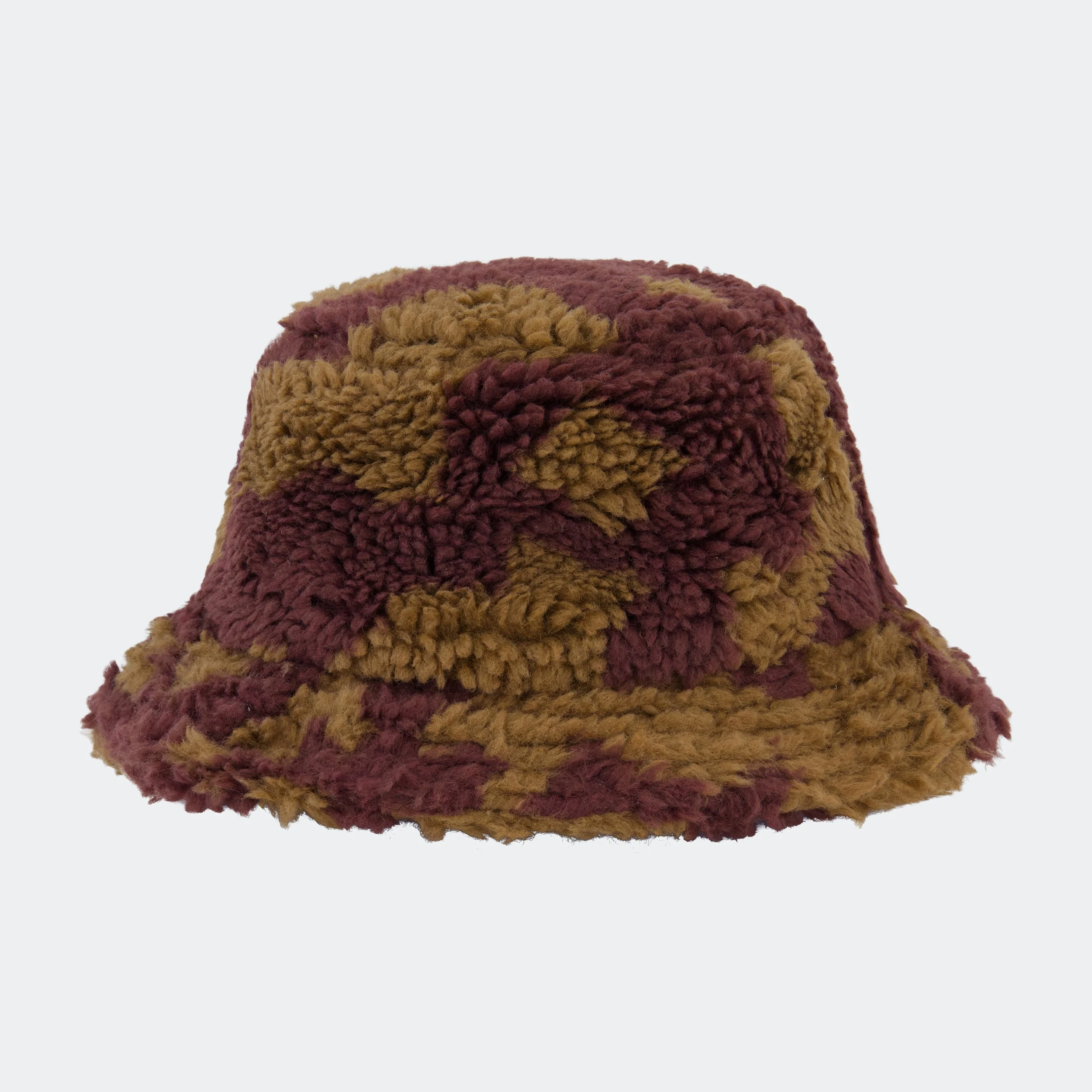
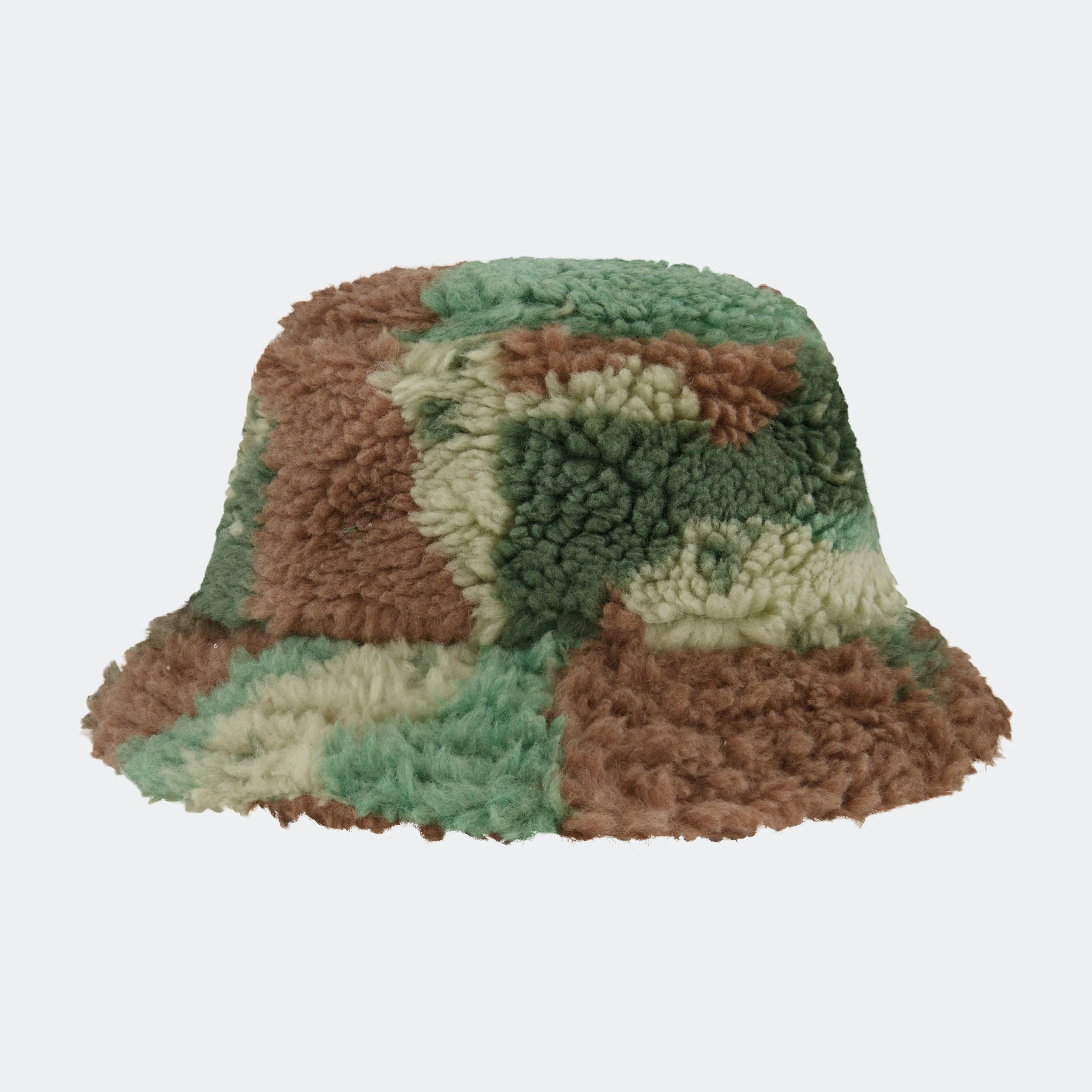
Bucket Hats - 34 USD
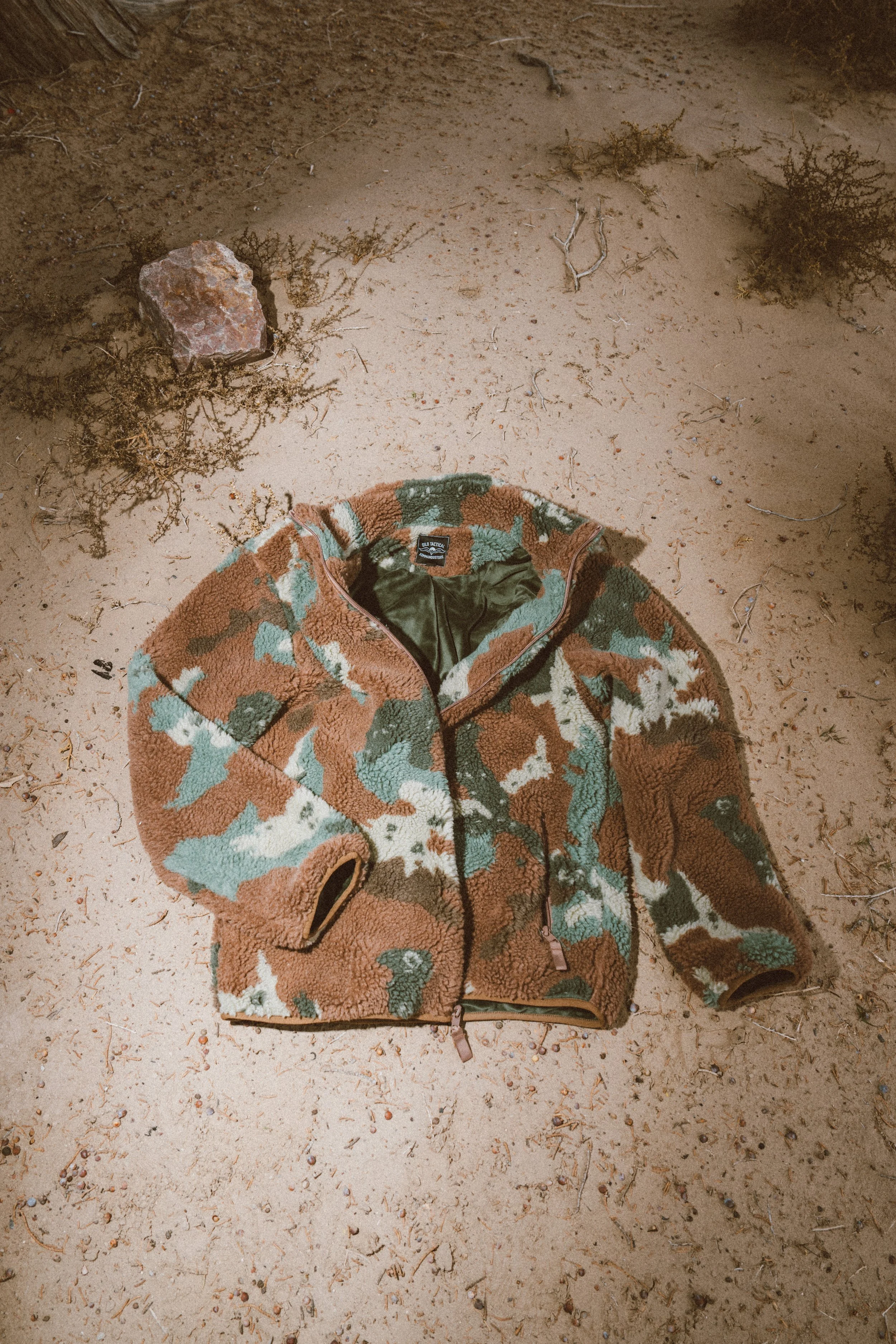
SOLDIER 2000
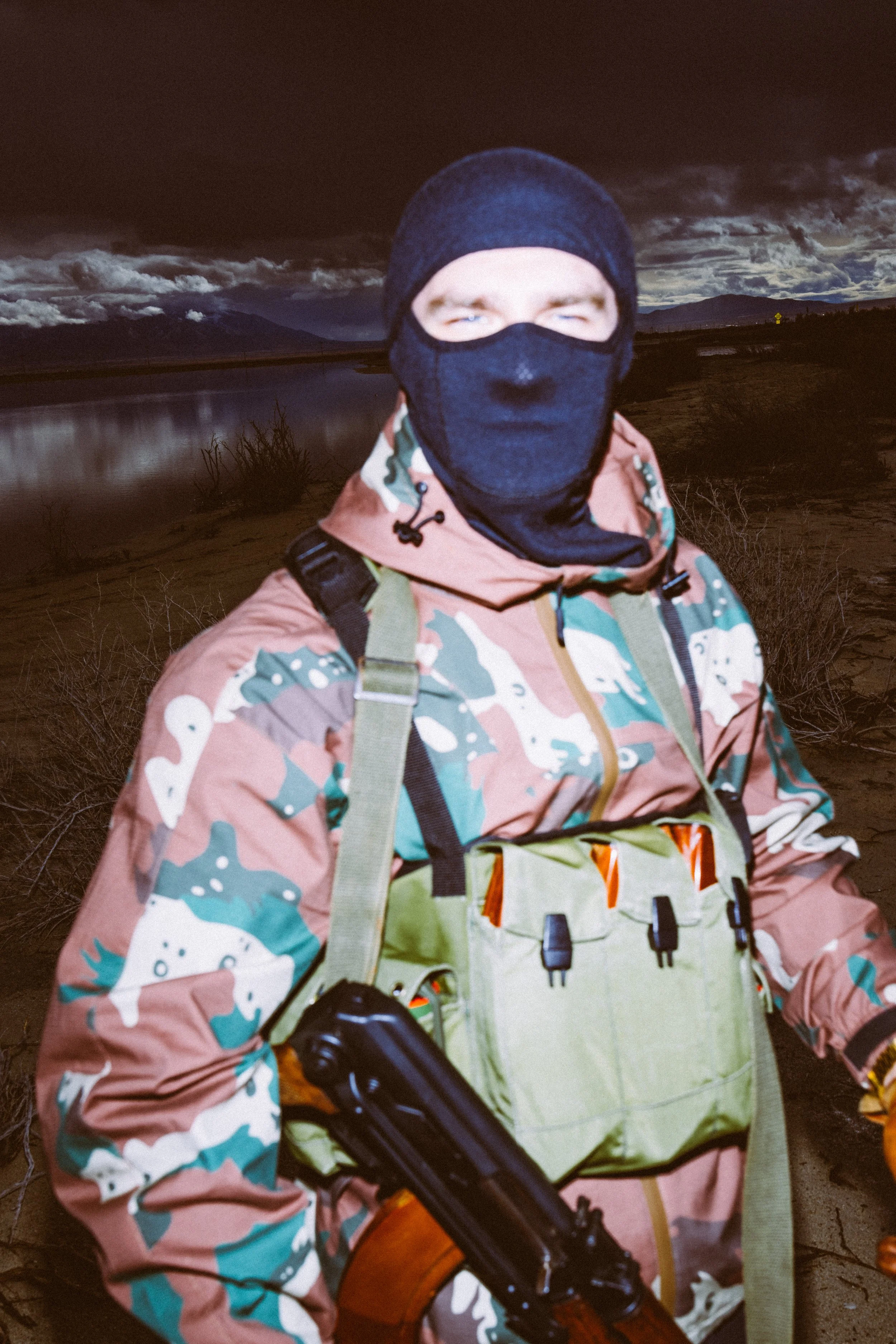
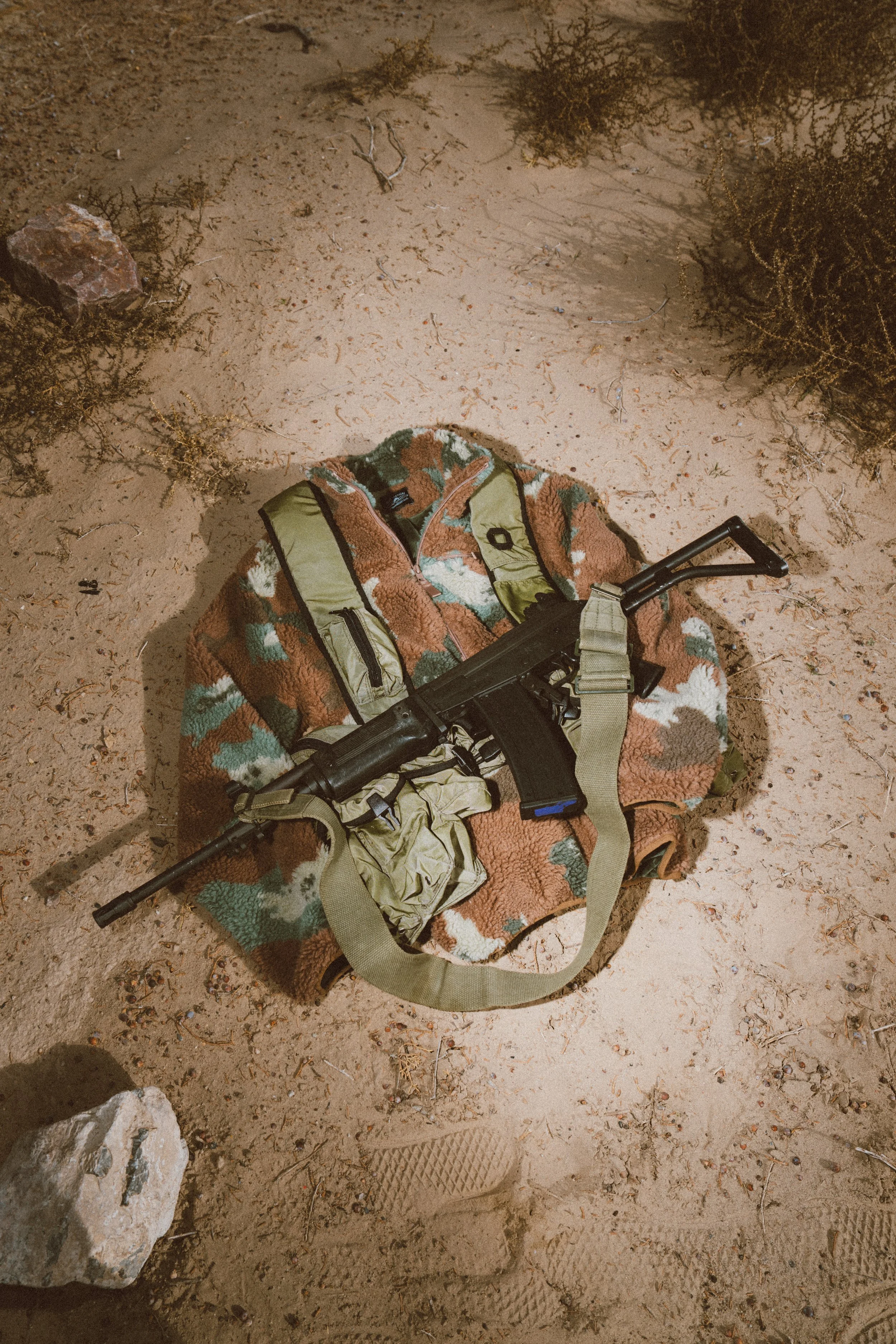
Retro Windbreaker in Soldier 2000
Soldier 2000: South Africa's Attempt To Rebrand Their Camouflage
Nutria (named after the rodent) brown was the standard uniform color for the SADF during its heyday in the border war throughout the 70s, 80s, and early 90s. It was chosen as an easy-to-produce, flat color that when properly “dirtied” by the harsh flora of the South African “Bush” landscape proved to be effective at concealing troops. But after the reorganization of South Africa’s military into the SADF with an “N” this time (SANDF), they began developing the “future”.
They ditched their Browns for a splash of greens & tans and a pattern very reminiscent of US Chocolate Chip camo. Developed by CSIR-Textile Technology group in the early 90s, It's designed to work in the muddy & dusty conditions seen all over South Africa and to give it credit, works a whole lot better than flat nutria at concealing & obscuring troops.
This was both a radical change for the functionality of the uniforms as well as a big PR move with the previous camo being associated with “Old” South Africa.
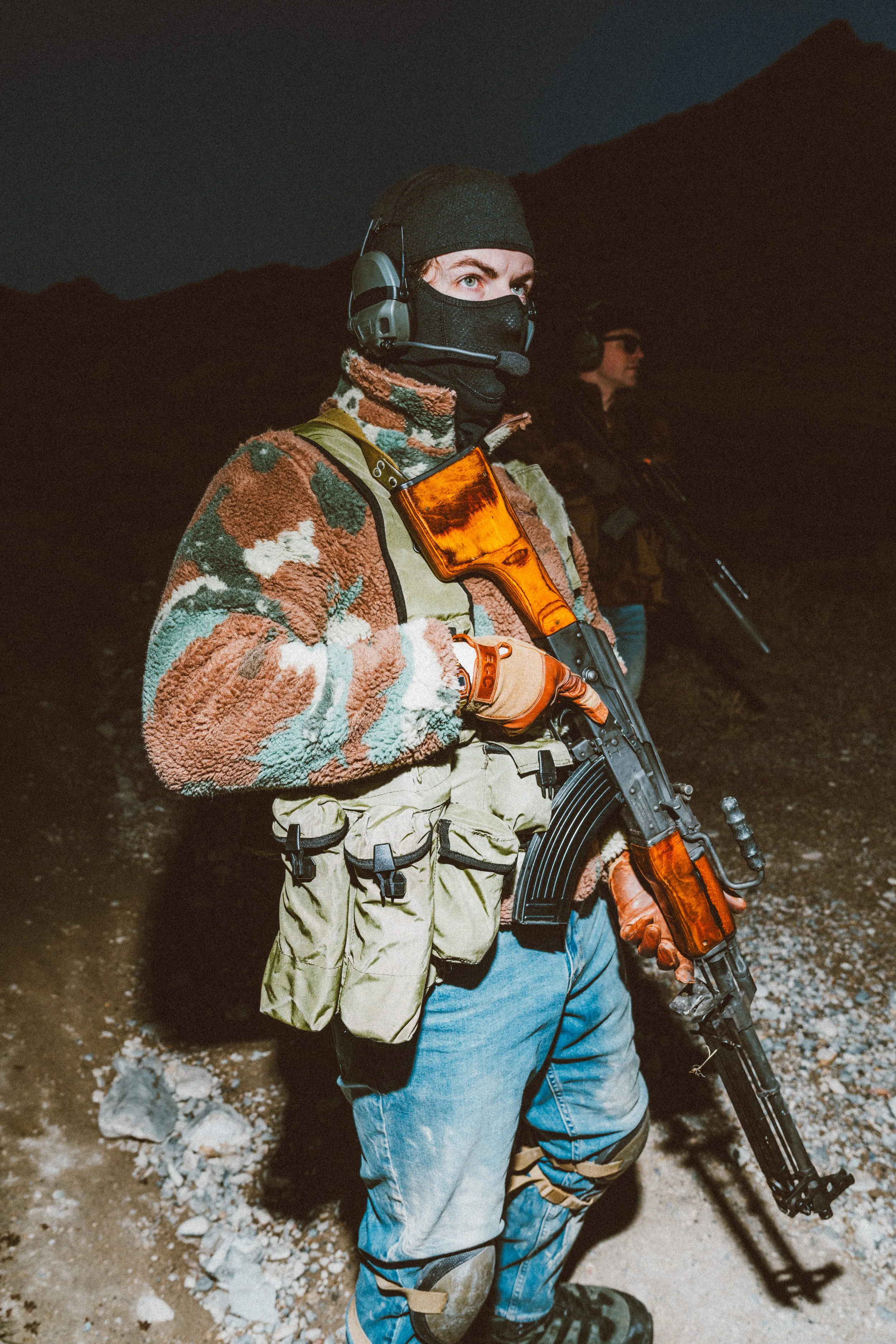
Gen. II Sherp in Soldier 2000
If you haven’t seen Soldier 2000 all over the surplus market, even in the most niche sectors, we don’t blame you — South Africa is extremely anal about letting civilians own or wear their camo as per their Defense Act of 2002.
In recent years, high-profile arrests involved people just appearing on TV wearing it. So getting it out of the country can be precarious even for the most daring of surplus dealers. Best way is to just “know a guy”. TIA.
Luckily in 2022, they announced their new camo pattern which just looks like they zoomed out soldier 2000 and added a few new colors. You know what that means? Much easier access to surplus.
Being such an iconic look for South Africa post-nutria-era, we picked some up and re-created the pattern digitally with meticulous detail.
“DT SPLINTER”
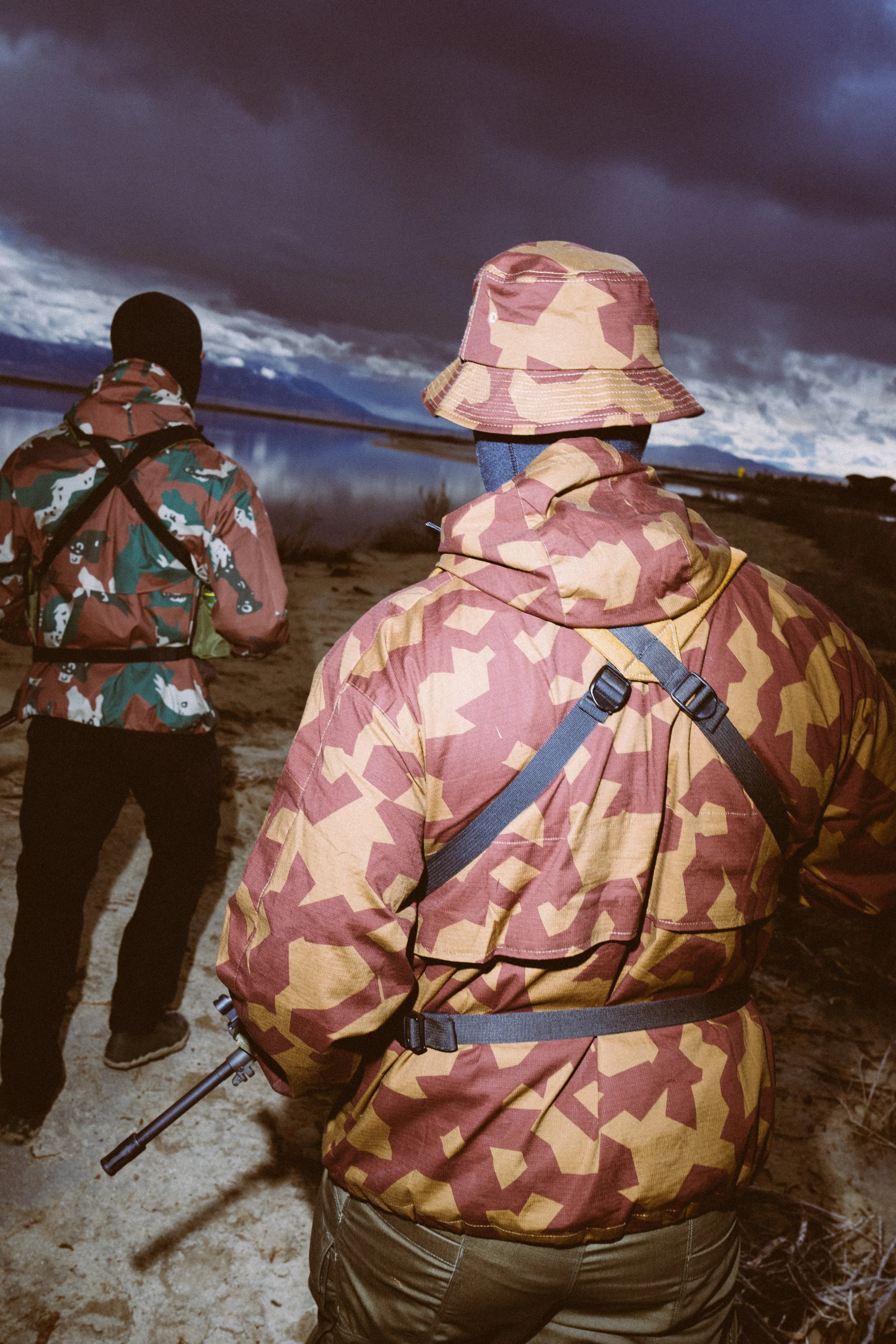
Retro Windbreaker in DT Splinter
KS stumbled across the photo below in a forum post from 2019. The author, M.J. Du Toit described the unique camo as a “Zig Zag” pattern on top of the standard-issue nutria brown. Splinter pattern camo was definitely a big inspiration here, as it almost looks like a 40s-60s Bulgarian camo of the same variety minus the “rain” in between.
The camo was designed as an experimental Recce uniform, and this photo is the only evidence we’ve been able to track down of its existence. We were so drawn to it, that we decided to reengineer the pattern and name it Du Toit, or “DT” Splinter.
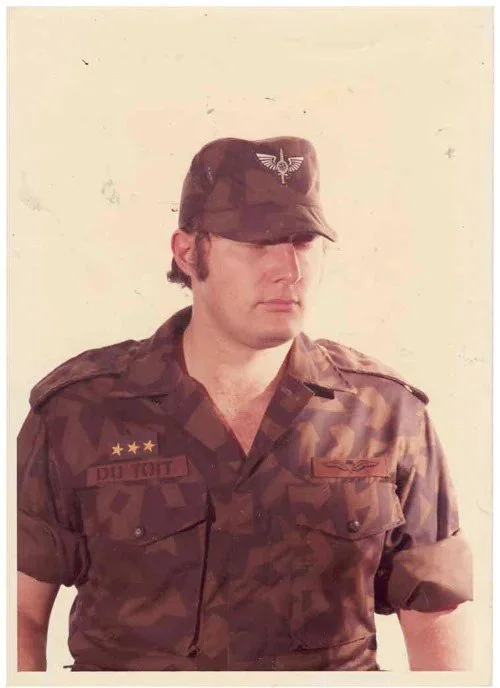
M.J. Du Toit in the only known photo of this pattern.
Who was M.J. Du Toit?
M.J. Du Toit is the man behind a large portion of the SADF’s early webbing development, including pattern 70.
According to the man himself, he was “always a collector of webbing and uniforms” and began to modify his own pattern 58 webbing to use. He then developed webbing based off of pattern 61/64 that could handle the wear and tear of his parachute battalion regimen. The SADF was so impressed by his re-design that they sent him off to consult with webbing manufacturers.
He’d go on to field test with the South African Council for Scientific & Industrial Research, or CSIR and then another Defense contractor called “Armscor.” He helped manufacture special boots, webbing, early battle jackets, and new “jumpable” gear for the SADF paratroopers.
Quite the portfolio.
Finally, in this very photo above, he’s wearing a never-fielded experimental uniform for the SADF Recces. That image on a forum post from 2019 is all the evidence we’ve been able to find of its existence. And if there’s one thing camo junkies love, it’s a camo pattern that’s hard to find in more ways than one.
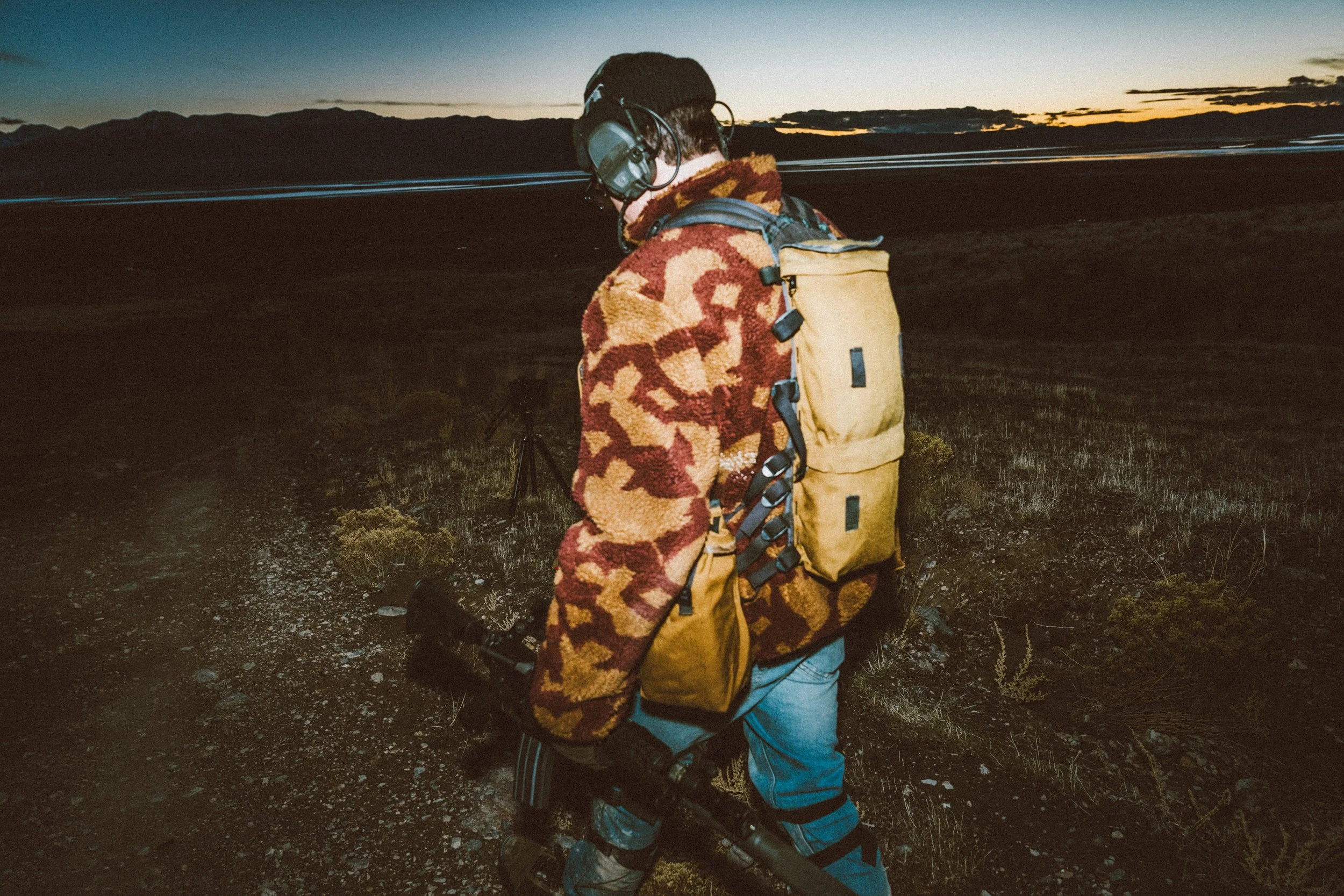
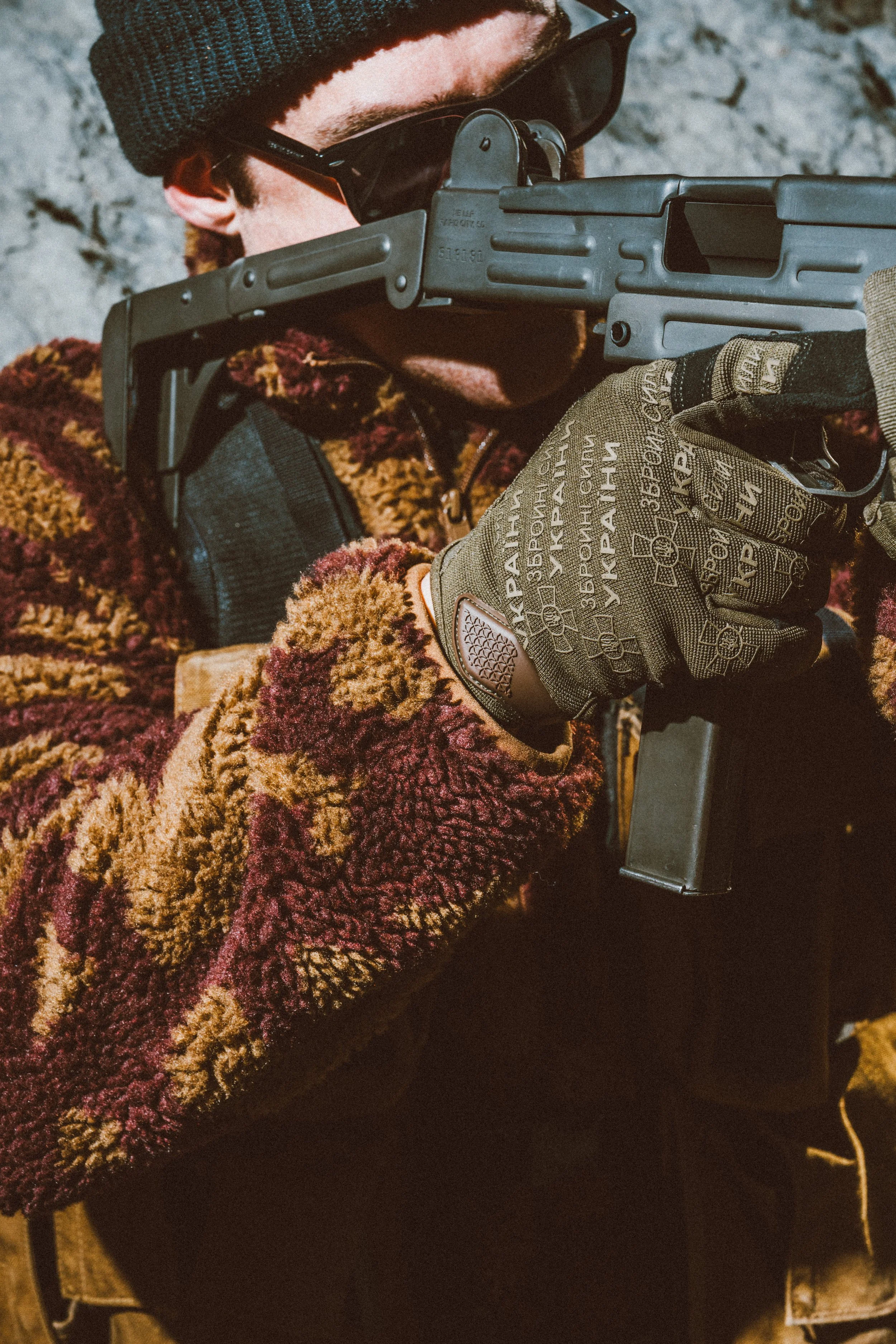
Gen. II Sherp in DT Splinter - aka “peanut butter & jelly”
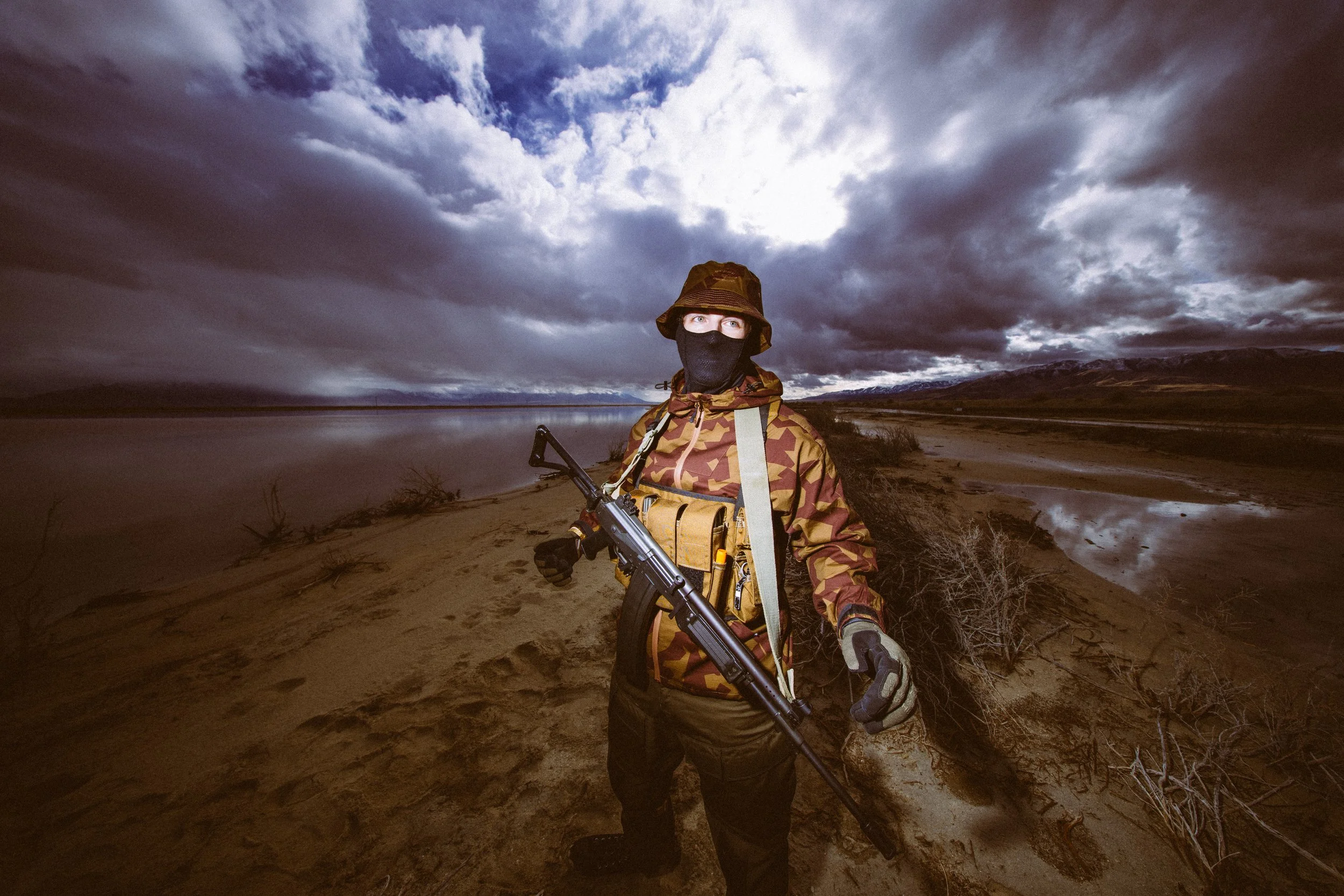
Retro Windbreaker & Bucket Hat in “DT Splinter”